Build a Branded Edition
Ship OctoMY™ applications under your own brand: names, colors, logo and watermark, all from one small directory of data.
Pro Tip
The default build already carries the OctoMY edition — you only need this page when you brand a build as something else, or when you want to understand where the colors come from.
What an edition is
An edition is one brand identity: the organization and product names, one seed color per application (the whole palette is computed from it), the 3D viewport background pair, and the logo and watermark assets. The build compiles the edition into the binaries at resolve time — brand identity is immutable at runtime on purpose.
An edition is a directory:
my-edition/
  edition.json      # the data — names, seeds, viewport, assets
  logo.svg          # only assets the edition brings itself; optional
The default edition lives in the repository at integration/editions/octomy/. Every field of edition.json is specified in the edition schema reference; the walk below covers what each section is for.
edition.json, section by section
{
  "schema": 1,
  "id": "my-edition",
  "names": {
    "organization": "Example Corp™",
    "organizationAscii": "Example Corp",
    "domain": "example.com",
    "brand": "Example™"
  },
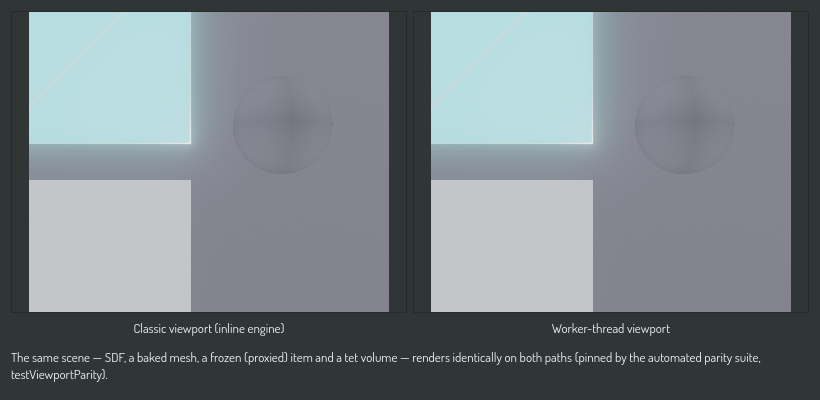
  "viewport": {
    "backgroundBottom": "#272727",
    "backgroundTop": "#2f2d2f"
  },
  "seeds": {
    "agent":       { "seed": "#e83636" },
    "remote":      { "seed": "#36bee8" },
    "hub":         { "seed": "#36e843" },
    "zoo":         { "seed": "#d18000" },
    "construct":   { "seed": "#e2552c" },
    "bahn":        { "seed": "#ffffff" },
    "singularity": { "seed": "#ffffff" },
    "auda":        { "seed": "#ffffff" }
  },
  "assets": {
    "logo":      "logo.svg",
    "watermark": "src/libs/libres/resources/images/octomy_watermark.svg"
  }
}
idmust equal the directory name — a copy-paste that forgets the rename fails the resolve instead of shipping under the wrong key.namescarries the display forms (trademark symbols welcome) plusorganizationAscii, the pure-ASCII form used for every data, config and cache path on disk. It is authored, never derived: a transliteration an algorithm picked for you is not a name you chose.viewportis the color pair behind the 3D geometry in Construct — an edition owns what its scene looks like behind the models the same way it owns the logo.seedsgives every application its one seed color. The palette — window shades, text shades, selection highlight, the works — is computed from that seed, so one value restyles the whole application. A seed may carry an optionalbackgroundto pin the window color instead of deriving it.assetsnames the logo and watermark by relative path, plus an optionalwindowmap with one window icon per application. An application you skip shows the "NO EDITION" placeholder in its title bar — loud on purpose, so a half-branded package cannot pass for a finished one.
How asset paths resolve
An asset path is tried against the edition directory first, then against the project root. The narrow scope wins so an edition that brings its own logo.svg beats a project file of the same name.
"logo": "logo.svg"
…resolves to my-edition/logo.svg when that file exists — the edition brought it.
"watermark": "src/libs/libres/resources/images/octomy_watermark.svg"
…misses in the edition directory and resolves against the project root — the edition reuses a stock asset. If a path resolves in neither place, the resolve fails and names both directories it tried.
Building with an edition
Point the resolve at the directory and build as usual:
qbs resolve project.editionDir:/absolute/path/to/my-edition
qbs build
The build validates edition.json, generates the branding header and resource bundle, and every product picks them up. Editing edition.json re-runs the generation on the next resolve — no clean rebuild needed.
The probe validates strictly inside the sections it owns: a typo like "organisation" is an error, not a silently ignored key. Sections it does not own (packaging metadata for your installer pipeline, for example) pass through untouched, so one file can serve both this build and your packaging tools.
What the seeds look like
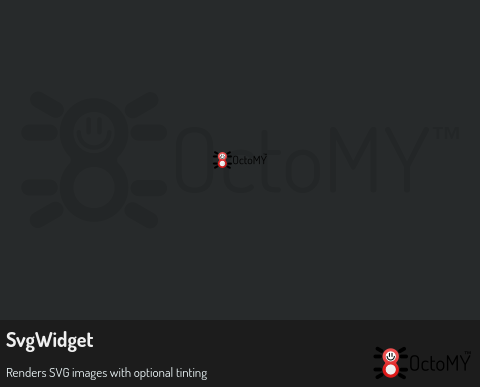
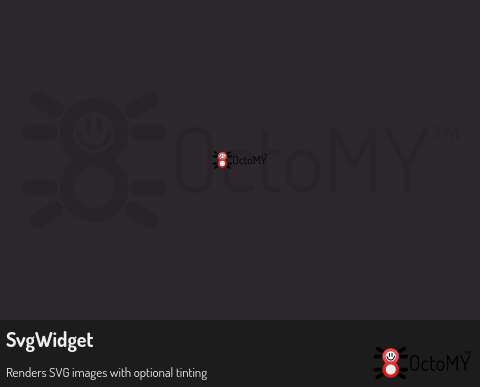
The same logo widget under two different application seeds — the palette around it is computed entirely from each application's one seed color:
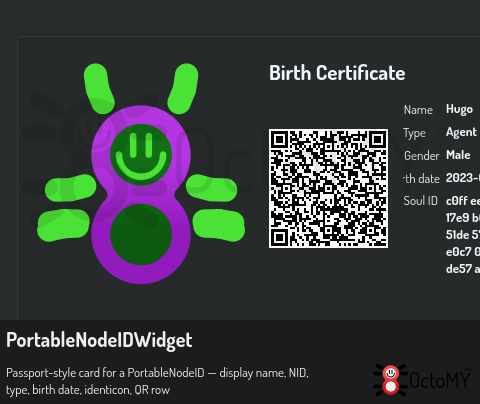
The node identity card picks its color from the node type's seed:
And the viewport background pair, rendered by the real viewport producers:
The build with no edition
qbs resolve project.editionDir:""
This is deliberately loud: every palette seeds white, the viewport background pair is black, and a "NO EDITION" placeholder appears where the logo was. A build that lost its edition must look broken from across the room — the silent alternative is how a wrong-brand binary ships without anyone noticing. If you see the white-and-black look, your project.editionDir did not reach the resolve.
See also
- Edition schema reference — every field, type, requirement and fallback
- Build from source — the general build guide