Anatomy of a robot limb
For simplicity I have decided to keep all 6 limbs of Devol identical. Each limb will be interchangeable with any other. This I hope will make building and maintaining the limbs much quicker and cheaper due to reuse, but the design process might take longer because now I have to ensure that the one design i decide upon actually will work for all 6 legs.
I have been thinking a lot, and created a 3d model for simulating the possible limb configurations. I have also managed to install OpenRave, and I have started learning to use it by adapting one of the example robot definition XML files while reading some of its tutorials on-line.
I have also looked at realistic actuators that might fit into the designs on global sourcing sites such as alibaba. For example I have received a quotation at 22USD per piece for 20pieces of this nice little actuator. Since I will need 18 of them, this is good news.
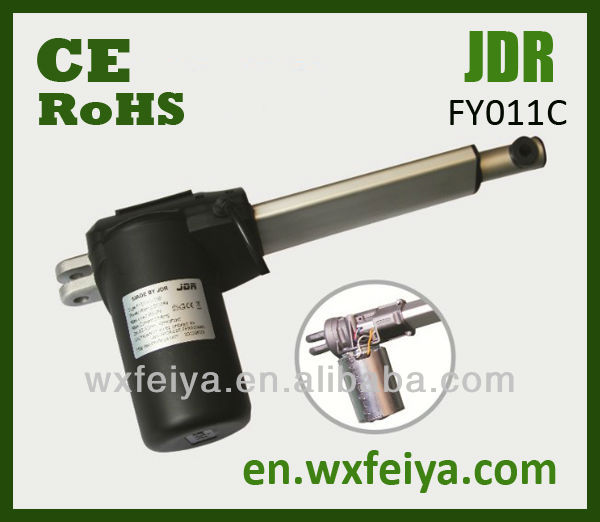
The idea is that instead of having geared motors at the joins, I will have linear electro-mechanical actuators in a configuration that is typical for hydraulic and pneumatic systems. The benefits are many:
- The design is simple
- The resulting robot will be more solid due to the separation of hinges and force in joints.
- Reaching higher precision in the actuators is easier than with geared motors due to the available flexibility of mounting positions.
- The actuators will actually be cheaper due to their outspread use in furniture.
- The actuators will remain static under load with 0 power drain.
- The actuators are available with built in position sensors and end switches
- The actuators are available with IP ratings for dust and water resistance. The one I found was rated IP66
- The choice of available actuators is huge with all sorts of quality, precision, speed and load requirements.
But how can I calculate the required dynamic and static forces? I found this great site that appears to be centered around building another hexapod. They have a head start, I better shape up!
Anyhow they made a series of tutorials, one which was very useful for my project, namely the PDF about simple hydraulics joints. I can warmly recommend it due to its simplicity and completeness.
My take-away was this figure with the matching formula:
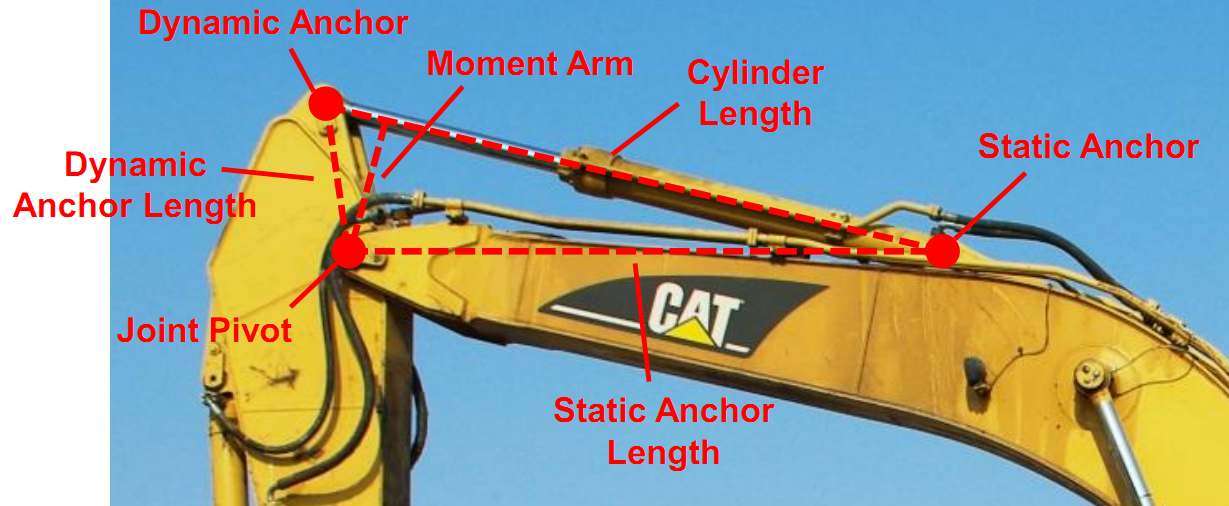
Linear Piston Force * Moment Arm = Torque @ Joint
Now I'll just have to find out the value for all my variables...